
Shadeports Cape Town
Shadeport installation and repairs in Cape Town
Shade Netting for Shadeports: Shade Factors, Colours & Fabric Guide
Shade netting is rated by its shade factor — the percentage of solar radiation the knit blocks — and nearly every decision about a shadeport's fabric flows from that number, the knit type and the colour. This Shadeports Cape Town guide covers the 80 versus 95 percent choice, why knitted HDPE is the structural standard, what colour really changes, how the waterproof fabrics differ, and when a net has reached the end of its UV life.
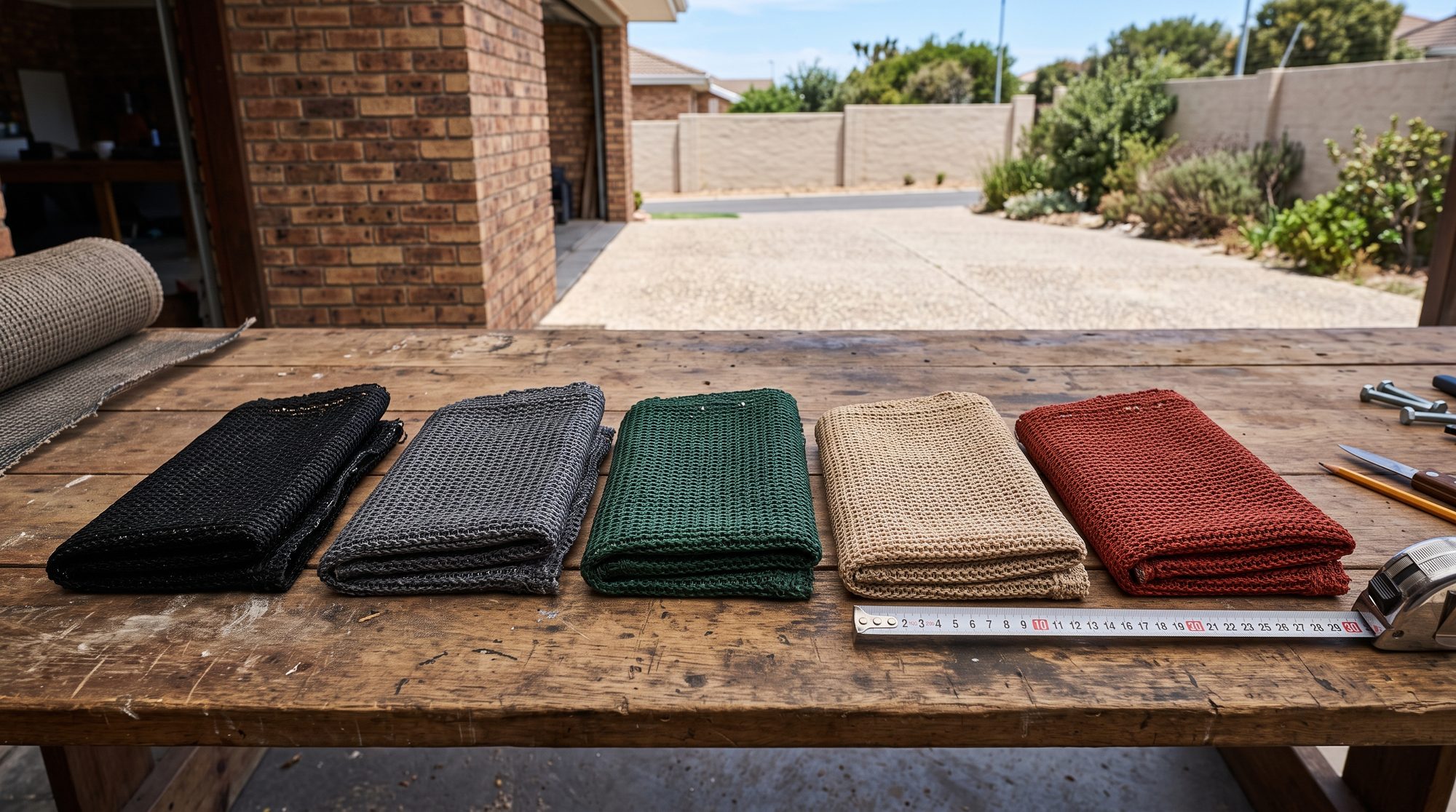
Five stocked netting colours, showing the knitted weave.
Shade Factor: 80% or 95%
A 95 percent net is the vehicle standard: it removes the UV band that fades paint, perishes rubber and cracks dashboards, and it drops the felt temperature under the fabric to comfortable levels on peak summer days. An 80 percent net trades protection for light — walkways, plant areas and patios often prefer it, because full-strength shade over a seating area can read gloomy. The knit density difference is visible held to the sky: the 95 shows pinpricks of light, the 80 a soft glow.
Shade Net Percentages from 20% to 95%
| Shade net | Sunlight blocked | Typical use |
|---|---|---|
| 20% – 40% | 20 – 40% | Vegetable gardens and nurseries that need most of the light |
| 50% – 60% | 50 – 60% | Plant shade and greenhouses |
| 80% | 80% | Patios, walkways and play areas where some light is wanted |
| 90% – 95% | 90 – 95% | Vehicle parking and pools, where UV protection matters most |
Shadeports use only the 80 and 95 percent grades. The lighter grades are horticultural nets and are not built for a tensioned structure.
Colour, Heat and Looks
Colour changes three things: UV behaviour, brightness underneath, and how the structure sits in the garden. Black and charcoal absorb the sun's energy in the fabric and block marginally more UV at the same rated factor — the protective choice, and the reason most vehicle installations are dark. Beige, grey and green read lighter underneath and disappear better against walls, thatch and planting. Brick tones suit face-brick suburbs. White net reads brightest underneath but shows dirt fastest, so it is supplied on order rather than stocked. Stocked colours cover green, black, grey, beige and brick, with wider ranges on order; fade resistance is part of the same UV stabilisation that carries the warranty.
Knitted HDPE vs Woven Net vs Waterproof Fabrics
Structural shade netting is knitted HDPE: interlocked loops that hold tension across a span, shrug off puncture without laddering, and take hem cables at the edges. Woven shade cloth — the agricultural roll at the co-op — frays from any cut edge and has no place on a tensioned structure. The waterproof family swaps breathability for dryness: PVC-coated membrane and waterproof-knitted fabric both shed rain to a fall, at 15 to 25 percent over net pricing; their behaviour and drainage detailing sit under waterproof shadeports.
UV Warranties and Real Lifespan
Quality netting carries a manufacturer UV warranty of up to 10 years — a warranty against the sun degrading the fabric, not against mechanical damage. Cape Town service life typically runs 10 to 15 years: the city's UV index is severe in summer, and north-facing nets carry the most exposure, so they chalk and harden first. Tension is the owner-side variable — a drum-tight net only carries sun, while a slack one adds flogging wear every windy day. End-of-life shows as chalky surface dust, stiffness, and tears starting at the hems.
When Netting Needs Replacing
Slack but sound fabric needs re-tensioning, the cheapest job on the structure. Chalked, brittle or hem-torn fabric needs a re-net — about half the cost of a new installation on a sound frame, with the UV warranty starting fresh. Both services, plus cable and pole work, are covered under shadeport repairs.
Choosing Netting for a New Installation
The standard Cape Town vehicle spec is 95 percent knitted HDPE in a dark colour on a galvanised frame — the combination every price on this site assumes. Structure options, sizes and tensioning detail sit under shade net carports, and installed costs by size are tabled under shadeport prices in Cape Town. How netting compares with solid sheeting is set out in the shadeport vs carport comparison, and approval questions in the Cape Town shadeport rules. Fabric samples come along to every free quote visit: 062 397 4233.
Frequently Asked Questions
- What does the shade percentage on netting mean?
- The shade factor is the share of solar radiation the knit blocks: a 95 percent net stops 95 percent of direct sun, an 80 percent net stops 80. Vehicle bays use 95 percent as standard; 80 percent suits patios and walkways where more daylight is welcome.
- Which netting colour is coolest?
- Darker nets — black and charcoal — absorb and re-radiate heat above the fabric and block marginally more UV at the same rated factor, so the space beneath them is the most protected. Lighter beige and grey nets reflect more and read brighter underneath. The rated shade factor matters more than colour.
- How long does shade netting actually last?
- Manufacturer UV warranties run up to 10 years on quality knitted HDPE, and Cape Town installations typically serve 10 to 15 years before re-netting. North-facing nets age fastest because they carry the most sun. Tension maintenance is the biggest owner-controlled factor in lifespan.
- What is the difference between knitted and woven shade net?
- Knitted net is made of interlocked loops that do not unravel when punctured and hold tension without tearing at fixings — the structural standard. Woven net frays from any cut and belongs on temporary agricultural cover, not on a tensioned structure.
- Is there netting that keeps rain out?
- Waterproof knitted fabrics and PVC-coated membranes both turn a shadeport into rain cover, installed with a fall so water sheds to one side. They cost 15 to 25 percent over standard net on the same frame.
- When should a net be replaced rather than re-tensioned?
- Re-tension when the net is sound but slack; replace when the fabric chalks, tears at hems or has passed its UV life. The frame almost always outlives the net, so replacement usually means a re-net at about half new-install cost, not a new structure.